The short answer
Brown Girl Dreaming is our top pick, Jacqueline Woodson’s memoir in verse, a 2014 National Book Award winner and 2015 Newbery Honor Book; El Deafo is the graphic memoir to start with, a 2015 Newbery Honor Book about growing up deaf; and Malala’s Magic Pencil is the picture book to read aloud, Malala’s own story for which Hachette lists ages 4-8.
Our verdict
Our Top Picks
An autobiography gives a child a true story in the voice of the person who lived it: Malala Yousafzai on speaking out when the Taliban banned girls from school, Cece Bell on the hearing aid strapped to her chest in first grade, John Lewis on the lunch-counter sit-ins. This guide compares ten such books, each written by its subject (some with a named co-writer) and each with a children’s or teen age range from its publisher or a named reviewer: a picture book, an early reader, graphic memoirs, a memoir in verse and young readers’ editions of famous adult memoirs. Biographies, books about a person by someone else, are not picks here; the FAQ explains the difference. For every book we name the exact edition we link, the publisher’s age range where one is published (or as Common Sense Media or an education catalogue lists it), what Kirkus Reviews or Common Sense Media say about it where they reviewed it, and what a parent may want to know first about racism, violence or other hard history in its pages.
Book finder
Find a memoir for your reader
Pick how your child will read and a price tier. The suggestion is our editorial starting point, drawn from the ten books below; the ages are each source's, not ours.
Tiers are relative to the books in this guide; live prices are in the comparison table below.
Compare the picks
Compare the 10 Autobiography Books for Kids
Each row is the edition we link. The ages column is the publisher’s range (for El Deafo and The Boy Who Harnessed the Wind, the publisher’s range as Common Sense Media lists it; for Boy, the only listing we found, from Penguin Random House’s education catalogue; for March, Top Shelf’s rating for each of the three books the omnibus collects). Kirkus’s and Common Sense Media’s ages are in each review, and how we suggest using all of them is under “About the age ranges in this guide” below. Content notes are the reviewers’ words, summarised (for Ruby Bridges Goes to School, Scholastic’s description).
 Brown Girl DreamingTop PickPoetry, civil rights, young writersVerse memoir$6.49 Prime
Evidence: Kirkus, 2014 Nancy Paulsen Books edition (ISBN 978-0-399-25251-8); we link the 2016 paperback
 El DeafoGraphic Memoir PickGraphic memoir, friendship, deafnessGraphic memoir$8.79 Prime
Evidence: Kirkus, 2014 Amulet/Abrams edition (ISBN 978-1-4197-1020-9); we link the paperback (ISBN 978-1-4197-1217-3)
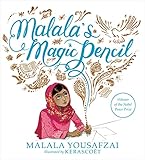 Malala's Magic PencilPicture-Book MemoirRead-aloud, picture book, educationPicture book$10.03 Prime
Evidence: Kirkus, this edition (ISBN 978-0-316-31957-7)
 Ruby Bridges Goes to SchoolEarly Reader MemoirEarly reader, civil rightsEarly reader$5.10 Prime
Evidence: maker specs only, no independent test
 SmileBraces and FriendshipGraphic memoir, braces, friendshipGraphic memoir$7.00 Prime
Evidence: Kirkus, 2010 Graphix edition (ISBN 978-0-545-13205-3); we link the 2020 paperback
 BoyClassic Author MemoirChapter book, humor, school storiesProse memoir$6.86 Prime
Evidence: Common Sense Media, 1984 Penguin Group edition (format not stated); we link the 2009 Viking Books for Young Readers paperback
 I Am Malala (Young Readers)Young Readers' EditionChapter book, education, activismProse memoir$6.29 Prime
Evidence: Kirkus, 2014 Little, Brown edition (ISBN 978-0-316-32793-0); we link the 2016 paperback
 The Boy Who Harnessed the Wind (Young Readers)Science and InventionChapter book, science, inventionProse memoir$5.70 Prime
Evidence: Common Sense Media, January 2016 Puffin edition, 304 pages; format not stated
 Becoming KareemSports MemoirChapter book, sports, civil rightsProse memoir$7.55 Prime
Evidence: Kirkus, 2017 Little, Brown edition (ISBN 978-0-316-55538-8); we link the 2018 paperback
 March (Omnibus Edition)Civil Rights HistoryGraphic memoir, civil rightsGraphic memoir$20.67 Prime
Content notes: Frequent N-word; violent scenes, Book Three the most violent (Common Sense Media)
Evidence: Kirkus, March: Book One alone (ISBN 978-1-60309-300-2); we link the omnibus of all three books
Autobiography or Biography? How the Picks Were Chosen
How this guide was built
built from publishers’ pages, published third-party reviews (Kirkus Reviews and Common Sense Media) and award records; we have not read or tested these books ourselves, and every judgment of a book’s content is a named reviewer’s.
The checks each book had to pass
- Written by its subject. An autobiography or memoir, told by the person who lived it, alone or with a named co-writer (“with Patricia McCormick”, “and Bryan Mealer”), including young readers’ editions the subject adapted. No biographies.
- An age range for young readers. A children’s or teen age or grade range from the publisher, or, where a publisher’s page gives none, as Common Sense Media or an education catalogue lists it, named as such.
- A specific edition. We link one edition and name its format, publisher, year and page count, because hardcover, paperback and young readers’ editions of the same story differ.
- Content notes from a named reviewer. Racism, violence and other hard history are described as Kirkus or Common Sense Media describe them, so you can judge before handing a book over.
- Awards only with a source. Award claims link to the awarding body (the American Library Association and the National Book Foundation).
- Stocked on Amazon. Each linked edition was in stock, new and sold by Amazon.com according to Amazon’s product data on November 4, 2026; the seller shown can change.
Where the reviews and ages come from and what “same series” means on an Evidence line
Where the reviews and ages come from
Reviews: Kirkus Reviews for eight of the books and Common Sense Media for nine; each review below links the one its Evidence line cites. Kirkus ends each review with its own age band (“Memoir. 10-14”); Common Sense Media gives an age rating (“age 10+”) and lists the publisher’s recommended ages. Publisher ranges come from the publishers’ own pages: Penguin Random House, Hachette (Little, Brown Books for Young Readers) and Scholastic. The Abrams page gives none, so for El Deafo, and for The Boy Who Harnessed the Wind, we give the publisher’s range as Common Sense Media lists it. For March, Top Shelf’s ISBN list rates each of the three books Young Adult+ (“~13 and up”); it does not list the omnibus edition we link. Awards: the American Library Association’s 2015 youth media awards and the National Book Foundation. We found no independent review of Ruby Bridges Goes to School, so its review rests on Scholastic’s page alone.
What “same series” means on an Evidence line
Kirkus prints the ISBN of the edition it reviewed; Common Sense Media lists the publisher, date and page count but no ISBN or format. Where Kirkus’s ISBN is the edition we link (Malala’s Magic Pencil), the Evidence line reads “Independently reviewed, exact model”. Everywhere else it reads “Independently reviewed, same series”: the review covered the same book in another edition, or Common Sense Media did not say which, never a different book, except that for March, Kirkus reviewed only Book One, the first of the three books collected in the omnibus edition we link. Each review names the edition the reviewer listed.
Detailed Reviews
Brown Girl Dreaming, Top Pick
paperback (2016) · Verse memoir
Parents of a reader who likes poetry, or wants to write, who want the civil rights era told from inside one family.
$6.49 from AmazonAs of Nov 10, 21:08 UTCVerdict
Jacqueline Woodson’s childhood in the 1960s and 1970s, told in free-verse poems, with three awards behind it that we can cite.
Evidence: Independently reviewed, same series. Kirkus: 2014 Nancy Paulsen Books edition, ISBN 978-0-399-25251-8, 336 pages.
Woodson tells her own story from her 1963 birth in Ohio, through a childhood with her grandparents in South Carolina, to Brooklyn, and the writer she was becoming. Kirkus notes she is “Writing in free verse” and says: “Woodson cherishes her memories and shares them with a graceful lyricism; her lovingly wrought vignettes of country and city streets will linger long after the page is turned.” It won the 2014 National Book Award for Young People’s Literature, and the American Library Association named it a 2015 Newbery Honor Book and the 2015 Coretta Scott King Author Award winner.
Ages: Penguin Random House lists the paperback for ages 10 and up; Kirkus’s band is 8-12; Common Sense Media rates it 10+. Content: Common Sense Media notes “There is discussion of violent reactions to 1960s-era civil rights marchers” and describes the South she grew up in, with “the sting of Jim Crow.” Edition: Kirkus reviewed the 2014 Nancy Paulsen Books edition (336 pages); we link the publisher’s 2016 paperback, which Penguin Random House lists at 368 pages.
Specs (linked: Brown Girl Dreaming, Nancy Paulsen Books paperback, 2016)
Pros
- Her childhood told in free-verse poems, shared “with a graceful lyricism” (Kirkus)
- Three awards we can cite, from the National Book Foundation and the ALA
- Sold by Amazon.com when we checked (Amazon’s product data)
Cons
- Kirkus’s band (8-12) and the publisher’s (10 and up) differ
- Told in free-verse poems rather than prose (Kirkus: “Writing in free verse”)
- Kirkus reviewed the 2014 edition, not this 2016 paperback
Who should buy it
Parents of a reader who likes poetry, or wants to write, who want the civil rights era told from inside one family.
- Format: paperback, 368 pages (Penguin Random House)
- Written by: Jacqueline Woodson, memoir in verse
- Publisher’s age range: 10 and up (Penguin Random House)
- Other ages: Kirkus 8-12; Common Sense Media 10+
- Awards: 2014 National Book Award (National Book Foundation); 2015 Newbery Honor and Coretta Scott King Author Award (ALA)
- Content notes: violent reactions to civil rights marchers discussed; Jim Crow South (Common Sense Media)
- Price tier: $
El Deafo, Graphic Memoir Pick
Parents of a comics fan, or of a child who feels different from classmates, who want a true story with humor and no violence.
$8.79 from AmazonAs of Nov 10, 21:08 UTCVerdict
Cece Bell’s graphic memoir of losing her hearing at four and finding a true friend, a 2015 Newbery Honor Book with no violence listed by Common Sense Media.
Evidence: Independently reviewed, same series. Kirkus: 2014 Amulet/Abrams edition, ISBN 978-1-4197-1020-9, 248 pages.
Bell draws herself and everyone around her as rabbits. Kirkus explains the premise: “When Cece is 4 years old, she becomes “severely to profoundly” deaf after contracting meningitis,” and her school hearing aid, the Phonic Ear, lets her hear her teacher even from another part of the school, which makes her feel like a superhero. Kirkus’s verdict: “Her whimsical color illustrations (all the human characters have rabbit ears and faces), clear explanations and Cece’s often funny adventures help make the memoir accessible and entertaining.” It adds that “An author’s note fleshes out Bell’s story, including a discussion of the many facets of deafness and Deaf culture.” The American Library Association named it a 2015 Newbery Honor Book.
Ages: Abrams’s page gives no range; Common Sense Media lists the publisher’s recommended ages as 8-12 and rates it 9+; Kirkus’s band is 8 and up. Content: Common Sense Media lists violence as “Not present” and notes “An adult smokes at a kitchen table, and Cece’s mom has a couple glasses of wine.” Edition: Kirkus reviewed the September 2014 Amulet/Abrams edition (ISBN 978-1-4197-1020-9, 248 pages), not this paperback (ISBN 978-1-4197-1217-3). For a child who feels different, our guide to books for a child’s self-esteem has more.
Specs (linked: El Deafo, Abrams paperback, 2014)
Pros
- A graphic memoir about growing up deaf, with an author’s note on deafness and Deaf culture (Kirkus)
- 2015 Newbery Honor Book (ALA)
- Common Sense Media lists no violence
Cons
- In the higher list-price tier here
- Abrams’s own page gives no age range
- Kirkus reviewed another edition (ISBN 978-1-4197-1020-9), not this paperback
Who should buy it
Parents of a comics fan, or of a child who feels different from classmates, who want a true story with humor and no violence.
- Format: paperback, 248 pages (Abrams), color illustrations (Kirkus)
- Written and illustrated by: Cece Bell, graphic memoir
- Publisher’s age range: 8-12 (as listed by Common Sense Media)
- Other ages: Kirkus 8 and up; Common Sense Media 9+
- Awards: 2015 Newbery Honor (ALA)
- Content notes: violence not present; an adult smokes, a parent drinks wine (Common Sense Media)
- Price tier: $$
Malala’s Magic Pencil, Picture-Book Memoir
Parents who want to read a true story of courage aloud and talk it through, starting with Malala's own words.
$10.03 from AmazonAs of Nov 10, 21:08 UTCVerdict
Malala Yousafzai’s own picture book, which Hachette lists for ages 4-8 and which, Kirkus says, only alludes to the attack on her.
Evidence: Independently reviewed, exact model. Kirkus: this edition, ISBN 978-0-316-31957-7.
Malala narrates: as a girl in Pakistan she wished for a magic pencil like the one on a TV show, then saw children who could not go to school and began to write and speak out. Kirkus notes that “this one is narrated by Malala herself, with a frame that is accessible to young readers,” and calls it “An inspiring introduction to the young Nobel Peace Prize winner and a useful conversation starter.” Kerascoët’s watercolor-and-ink illustrations carry gold ink designs over the pictures, per Kirkus.
Ages: Hachette lists ages 4-8; Kirkus’s band is 5-8; Common Sense Media rates it 5+. Content: Kirkus says the book “only alludes to the attempt on her life, with a black page (“the dangerous men tried to silence me. / But they failed”) and a hospital bracelet on her wrist the only hints of the harm that came to her,” and that “adult readers may need to help children understand Malala’s “work,””. Common Sense Media says “The violent attack against Malala is written in vague, nonspecific language”. Edition: Kirkus’s review prints ISBN 978-0-316-31957-7, the hardcover we link. This is a different book from #7, Malala’s longer memoir, which Hachette lists for ages 10-99.
Specs (linked: Malala’s Magic Pencil, Little, Brown hardcover, 2017)
Pros
- Her story as a picture book, narrated by Malala herself (Kirkus)
- Kirkus says the attack is only alluded to; Common Sense Media calls its telling “vague, nonspecific”
- Kirkus calls it “a useful conversation starter”
Cons
- In the higher list-price tier here, as a hardcover
- Kirkus says adults “may need to help children understand” her work
- The attack and her recovery are covered in her longer memoir (#7), not here
Who should buy it
Parents who want to read a true story of courage aloud and talk it through, starting with Malala’s own words.
- Format: hardcover picture book, 48 pages (Hachette)
- Written by: Malala Yousafzai; illustrated by Kerascoët
- Publisher’s age range: 4-8 (Hachette)
- Other ages: Kirkus 5-8; Common Sense Media 5+
- Content notes: the attack is only alluded to (Kirkus); “written in vague, nonspecific language” (Common Sense Media)
- Price tier: $$
Ruby Bridges Goes to School: My True Story, Early Reader Memoir
Parents of an early reader who want a first true story about the civil rights movement, told by the girl who lived it.
$5.10 from AmazonAs of Nov 10, 21:08 UTCVerdict
Ruby Bridges tells her own story of integrating an all-white New Orleans school in simple text with photographs, in Scholastic’s Level 2 reader series; no independent review found.
Evidence: No independent test; maker specs. Source: Scholastic.
In 1960, Scholastic’s description says, six-year-old Ruby Bridges became the first African-American to attend an all-white school in New Orleans. Scholastic describes this reader, written by Bridges herself: “With simple text and historical photographs, this easy reader explores an amazing moment in history and celebrates the courage of a young girl who stayed strong in the face of racism.” At 32 pages it is the shortest of the picks here. It is part of Scholastic’s Reader series at Level 2; for more early readers, see our guide to books for a child learning to read.
Ages: Scholastic lists ages 4-8 and grades Pre-K to 3. Content: Scholastic’s description says she “walked through an angry crowd and into a school, changing history” and names racism. We found no Kirkus or Common Sense Media review of this reader, so we have no independent content note.
Specs (linked: Ruby Bridges Goes to School, Scholastic Reader Level 2 paperback)
Pros
- An early reader written by Ruby Bridges herself, with historical photographs (Scholastic)
- The shortest book here, at 32 pages
- The lowest list price of the picks here
Cons
- No independent review found; this review rests on Scholastic’s page alone
- Scholastic’s 4-8 is the only age range we found
Who should buy it
Parents of an early reader who want a first true story about the civil rights movement, told by the girl who lived it.
- Format: paperback early reader, 32 pages, historical photographs (Scholastic)
- Written by: Ruby Bridges
- Publisher’s age range: 4-8; grades Pre-K to 3 (Scholastic)
- Other ages: none found
- Content notes: an angry crowd and racism, per Scholastic’s description
- Price tier: $
Smile, Braces and Friendship
paperback (2020) · Graphic memoir
Parents of a comics reader who likes stories about braces, crushes and friends who are not always kind.
$7.00 from AmazonAs of Nov 10, 21:08 UTCVerdict
Raina Telgemeier’s graphic memoir of a fall that knocked out her front teeth and the braces and friendships that followed; its publisher and Kirkus disagree on age.
Evidence: Independently reviewed, same series. Kirkus: 2010 Graphix edition, ISBN 978-0-545-13205-3, 224 pages.
Telgemeier trips after a Girl Scout meeting and spends years in surgeries, braces and headgear while starting middle school. Kirkus calls it “an utterly charming graphic memoir of tooth trauma, first crushes and fickle friends, sweetly reminiscent of Judy Blume’s work,” and notes that “Her friends offer little solace through this trying ordeal, spending more of their time teasing than comforting her.” Common Sense Media adds that she “gets a crush on a boy who barely notices her, experiences the Loma Prieta Earthquake in San Francisco, and deals with friends who are not always supportive and are sometimes downright mean.”
Ages: Scholastic lists ages 8-12 (grades 3-7) for this paperback; Kirkus’s band is 12 and up; Common Sense Media rates it 10+. Edition: Kirkus reviewed Graphix’s 2010 first edition (224 pages); we link Scholastic’s 2020 paperback, also 224 pages. If you want a graphic memoir set in early childhood rather than middle school, see #2.
Specs (linked: Smile, Graphix paperback, 2020)
Pros
- A graphic memoir about braces, crushes and changing friendships in middle school (Kirkus; Common Sense Media)
- Kirkus compares it to Judy Blume’s work
- Sold by Amazon.com when we checked (Amazon’s product data)
Cons
- Sources disagree on age: Scholastic 8-12, Kirkus 12 and up
- Kirkus reviewed the 2010 first edition, not this 2020 paperback
- Friendship trouble and teasing run through the book (Kirkus)
Who should buy it
Parents of a comics reader who likes stories about braces, crushes and friends who are not always kind.
- Format: paperback graphic memoir, 224 pages (Scholastic)
- Written and illustrated by: Raina Telgemeier
- Publisher’s age range: 8-12; grades 3-7 (Scholastic)
- Other ages: Kirkus 12 and up; Common Sense Media 10+
- Content notes: dental injury and surgeries, a crush, teasing and mean friends (Kirkus; Common Sense Media)
- Price tier: $
Boy: Tales of Childhood, Classic Author Memoir
Parents of a Roald Dahl fan who want the true, and sometimes cruel, school stories from his own childhood.
$6.86 from AmazonAs of Nov 10, 21:08 UTCVerdict
Roald Dahl’s own stories of his childhood and schools, which Common Sense Media calls “unsentimental and often comic”; it rates it 11+ for its descriptions of caning.
Evidence: Independently reviewed, same series. Common Sense Media: 1984 Penguin Group edition, 176 pages, format not stated.
Dahl, the author of Charlie and the Chocolate Factory, tells of his Welsh hometown, a war on the local sweetshop owner and three schools (Common Sense Media’s summary). Common Sense Media sums it up: “Dahl autobiography focuses on nasty school days.” Amazon lists it as “Book 1 of 2: Roald Dahl’s Autobiography”.
Ages: Common Sense Media rates it 11+. The only Penguin Random House age or grade listing we found is its secondary education catalogue, which lists grades 9-12 and a Lexile measure of 1020L; we found no Kirkus review. Content: Common Sense Media notes “Dahl describes several canings” and writes: “Because Dahl tells repeatedly of the cruelty of schoolmasters who constantly refined their caning techniques on him, some children will be saddened, and others enraged, by the unfairness of it all.” Edition: Common Sense Media lists the Penguin Group edition of 1984 (176 pages); we link the 2009 Viking Books for Young Readers paperback (192 pages; Penguin Random House and Amazon list that imprint).
Specs (linked: Boy: Tales of Childhood, Viking Books for Young Readers paperback, 2009)
Pros
- Roald Dahl’s own account of his childhood, which Penguin Random House presents as where he “got all his wonderful story ideas”
- Common Sense Media calls his writing “unsentimental and often comic”
- One of the lower list prices here
Cons
- School canings recur through the book (Common Sense Media)
- No publisher age range found beyond an education catalogue’s grades 9-12
- Common Sense Media reviewed the 1984 edition, not this 2009 paperback
Who should buy it
Parents of a Roald Dahl fan who want the true, and sometimes cruel, school stories from his own childhood.
- Format: paperback, 192 pages (Penguin Random House)
- Written by: Roald Dahl, book 1 of 2 of his autobiography (Amazon)
- Publisher’s grade listing: grades 9-12, Lexile 1020L (Penguin Random House education catalogue)
- Other ages: Common Sense Media 11+
- Content notes: several canings described (Common Sense Media)
- Price tier: $
I Am Malala (Young Readers Edition), Young Readers’ Edition
Young Readers Edition paperback · Prose memoir
Parents of a reader who knows Malala's name and wants her own account, including the attack.
$6.29 from AmazonAs of Nov 10, 21:08 UTCVerdict
Malala Yousafzai’s memoir, which Kirkus says was rewritten specifically for children with Patricia McCormick, covering her campaign for girls’ schooling, her shooting by the Taliban and her recovery.
Evidence: Independently reviewed, same series. Kirkus: 2014 Little, Brown edition, ISBN 978-0-316-32793-0, 240 pages.
This is not a cut-down copy of the 2013 adult book. Kirkus says: “With the capable assistance of co-author McCormick, the account has been effectively rewritten specifically for children,” and describes it as “covering Yousafzai’s growth in activism, her shooting and her recovery in England.” Kirkus has reservations: Malala’s voice “often tells rather than shows”, and of what was lost from the adult book, “most lamentable is social and political context.”
Ages: Hachette lists ages 10-99; Kirkus’s band is 10-14; Common Sense Media rates it 10+. Content: Common Sense Media’s summary is “Inspiring memoir of teen Nobel laureate shot by Taliban.”, and it notes “Malala remembers nothing about being shot”. Edition: Kirkus reviewed Little, Brown’s 2014 edition (240 pages); we link the 2016 paperback (256 pages, Hachette). For the picture-book version of her story, see #3, a separate, shorter book.
Specs (linked: I Am Malala, Young Readers Edition, Little, Brown paperback, 2016)
Pros
- Rewritten for children with a co-author, not a simple abridgment (Kirkus)
- Malala’s own account of her activism for girls’ education (Kirkus)
- One of the lower list prices here
Cons
- Kirkus found the social and political context thinner than in the adult book
- Covers her shooting and recovery (Kirkus)
- Kirkus reviewed the 2014 edition, not this 2016 paperback
Who should buy it
Parents of a reader who knows Malala’s name and wants her own account, including the attack.
- Format: paperback, 256 pages (Hachette)
- Written by: Malala Yousafzai with Patricia McCormick
- Publisher’s age range: 10-99 (Hachette)
- Other ages: Kirkus 10-14; Common Sense Media 10+
- Content notes: her shooting by the Taliban and recovery (Kirkus; Common Sense Media)
- Price tier: $
The Boy Who Harnessed the Wind (Young Readers Edition), Science and Invention
The Boy Who Harnessed the Wind (Young Readers)
Young Readers Edition paperback · Prose memoir
Parents of a child who likes building and taking things apart, who want a hard true story that ends in an invention.
$5.70 from AmazonAs of Nov 10, 21:08 UTCVerdict
William Kamkwamba’s account of building a windmill from scrap to bring power to his family’s home in Malawi during a famine, retold, in Penguin Random House’s words, “for a younger audience”.
Evidence: Independently reviewed, same series. Common Sense Media: January 2016 Puffin edition, 304 pages, format not stated.
In Common Sense Media’s summary, Kamkwamba had to drop out of school during a famine, borrowed science books from the village library and built a windmill from junkyard parts. Kirkus says the authors “have condensed the original memoir of the same name” and that “there are also many descriptions of how and why power-generating inventions work”. Common Sense Media calls it an “Inspiring true tale of invention packs heart and hope.” Penguin Random House says the edition is “Complete with photographs, illustrations, and an epilogue”.
Ages: Common Sense Media lists the publisher’s recommended ages as 10-18 and rates it 10+; Penguin Random House’s education catalogue lists grade 5 and up (Lexile 860L); Kirkus’s band is 11-16. Content: Kirkus warns that “The text does not spare readers the effects of starvation and grinding poverty on humans and animals.” Edition: Common Sense Media lists the Puffin edition of January 2016 (304 pages), the same date and page count as the paperback we link, without naming the format; Kirkus reviewed Dial’s February 2015 edition (304 pages, ISBN 978-0-8037-4080-8).
Specs (linked: The Boy Who Harnessed the Wind, Young Readers Edition, Puffin paperback, 2016, now listed under Rocky Pond Books)
Pros
- Explains how and why power-generating inventions work (Kirkus)
- A young readers’ edition condensed from the adult memoir by its authors (Kirkus)
- Sold by Amazon.com when we checked (Amazon’s product data)
Cons
- Kirkus says it does not spare readers the effects of starvation
- Penguin Random House’s page for this ISBN gives a grade (5 and up), not an age; the 10-18 range comes from Common Sense Media’s listing
- Common Sense Media does not say which format it reviewed
Who should buy it
Parents of a child who likes building and taking things apart, who want a hard true story that ends in an invention.
- Format: paperback, 304 pages, with photographs and illustrations (Penguin Random House)
- Written by: William Kamkwamba and Bryan Mealer; illustrated by Anna Hymas
- Publisher’s age range: 10-18 (as listed by Common Sense Media)
- Other ages: grade 5 and up, Lexile 860L (Penguin Random House education catalogue); Kirkus 11-16; Common Sense Media 10+
- Content notes: famine, starvation and poverty (Kirkus)
- Price tier: $
Becoming Kareem, Sports Memoir
Parents of a sports fan who want a memoir about race and identity as much as basketball.
$7.55 from AmazonAs of Nov 10, 21:08 UTCVerdict
Kareem Abdul-Jabbar’s memoir of growing up in New York, playing for John Wooden at UCLA and finding his faith and his voice on race, which Common Sense Media calls “an autobiography for young readers”.
Evidence: Independently reviewed, same series. Kirkus: 2017 Little, Brown edition, ISBN 978-0-316-55538-8, 256 pages.
Kirkus describes it as “One of the greatest basketball players of all time reminisces on the lessons that pushed him into a life of personal reinvention,” with coach John Wooden of UCLA as the most significant of his influences: “including most significantly coach John Wooden of UCLA, where Abdul-Jabbar and the Bruins accumulated an awe-inspiring 88-2 record.” Kirkus notes that he “publicly embraced his conversion to Islam by renaming himself”.
Ages: Hachette lists ages 10-99; Kirkus’s band is 10-16; Common Sense Media rates it 10+. Content: Common Sense Media notes ‘The “N” word appears frequently throughout the book’ and that “The book mentions several violent incidents from the era”. Edition: Kirkus reviewed Little, Brown’s November 2017 edition (256 pages); we link the 2018 paperback (304 pages, Hachette).
Specs (linked: Becoming Kareem, Little, Brown paperback, 2018)
Pros
- A basketball star’s own story, with coach John Wooden as his most significant influence (Kirkus); Common Sense Media calls it “an autobiography for young readers”
- Ties sport to faith, identity and race (Kirkus)
- Sold by Amazon.com when we checked (Amazon’s product data)
Cons
- The N-word appears frequently (Common Sense Media)
- More about growing up and identity than game action, per Kirkus’s summary
- Kirkus reviewed the 2017 edition, not this 2018 paperback
Who should buy it
Parents of a sports fan who want a memoir about race and identity as much as basketball.
- Format: paperback, 304 pages (Hachette)
- Written by: Kareem Abdul-Jabbar and Raymond Obstfeld
- Publisher’s age range: 10-99 (Hachette)
- Other ages: Kirkus 10-16; Common Sense Media 10+
- Content notes: frequent N-word; violent incidents of the civil rights era mentioned (Common Sense Media)
- Price tier: $
March (Omnibus Edition), Civil Rights History
Parents of a comics reader who is studying the civil rights movement or wants a first-hand account of it, from the sit-ins to the Voting Rights Act.
$20.67 from AmazonAs of Nov 10, 21:08 UTCVerdict
Congressman John Lewis’s graphic memoir of the civil rights movement, all three books in one paperback volume; Top Shelf rates each of the three books Young Adult+ (“~13 and up”).
Evidence: Independently reviewed, same series. Kirkus: March: Book One alone, ISBN 978-1-60309-300-2, 128 pages.
Lewis tells of raising chickens on his family’s Alabama farm, meeting Martin Luther King Jr. and the 1960 Nashville lunch-counter sit-ins, in black-and-white art by Nate Powell. Of Book One, Kirkus says: “A powerful tale of courage and principle igniting sweeping social change, told by a strong-minded, uniquely qualified eyewitness.” This edition goes on through the other two books: in Common Sense Media‘s summary of Book Two, the Freedom Riders “are met with police brutality, beatings, attacks by dogs, and even murder” on the way to the 1963 March on Washington, and Book Three runs from the bombing of the 16th Street Baptist Church in Birmingham through the Selma marches to the 1965 Voting Rights Act. Penguin Random House‘s page for the paperback lists 588 pages and says “This new single-volume edition features a detailed index.”
Ages: Top Shelf’s ISBN list rates Book One, Book Two and Book Three each Young Adult+ (“~13 and up”); it does not list the omnibus, and Penguin Random House’s page for it gives no age. Common Sense Media rates each of the three books 12+ and lists the publisher’s recommended ages as 12-17 for Book One and 12-18 for Books Two and Three; Kirkus’s band for Book One is 11-15. Content: Common Sense Media notes ‘The “N” word is used frequently’ in Book One, says “March: Book Two contains many scenes of violence” and calls Book Three “the most violent volume in the series”; Kirkus describes Book One’s “rising tides of protest being met with increasingly violent responses”. The publisher’s description mentions Lewis “receiving beatings from state troopers”. Edition: Kirkus reviewed March: Book One on its own (ISBN 978-1-60309-300-2, 128 pages); we link the 2026 omnibus paperback (ISBN 978-1-60309-605-8, 588 pages), which collects all three books.
Specs (linked: March (Omnibus Edition), Top Shelf paperback, 2026)
Pros
- A civil rights leader’s own account, from the sit-ins to Selma, in graphic form (Kirkus; Common Sense Media)
- All three books in one volume, with an index (Penguin Random House)
- Sold by Amazon.com when we checked (Amazon’s product data)
Cons
- Common Sense Media rates each book 12+ and calls Book Three the most violent of the three
- The N-word and violent scenes (Common Sense Media)
- Kirkus reviewed Book One on its own, not this omnibus edition
Who should buy it
Parents of a comics reader who is studying the civil rights movement or wants a first-hand account of it, from the sit-ins to the Voting Rights Act.
- Format: paperback graphic memoir, 588 pages, all three books in one volume with an index (Penguin Random House); black-and-white art (Kirkus on Book One)
- Written by: John Lewis and Andrew Aydin; art by Nate Powell
- Publisher’s age rating: Young Adult+ (~13 and up) for each of the three books (Top Shelf); none listed for the omnibus
- Other ages: Common Sense Media 12+ for each book; Kirkus 11-15 (Book One)
- Content notes: frequent N-word; violent scenes, Book Three the most violent (Common Sense Media)
- Price tier: $$
Matching a Memoir to Your Reader
About the age ranges in this guide
Every age or grade in this guide belongs to a named source: the publisher, Kirkus’s age band, Common Sense Media’s rating, or a publisher’s education catalogue. None is our own advice, and the sources often disagree: Scholastic lists Smile for ages 8-12, Kirkus for 12 and up. Use them as a starting point. Before you hand a book over, read the publisher’s description and the first few pages yourself, check the content notes in its review above, and decide for your own child. This is the one place we say this; the reviews only name the sources.
Reading together or reading alone
The two shortest books here, Malala’s Magic Pencil (48 pages) and Ruby Bridges Goes to School (32 pages), are a picture book and an early reader; Kirkus says that near the end of the first, adults may need to help children understand Malala’s “work”, and Scholastic’s description of the second mentions the angry crowd Ruby faced. The graphic memoirs, El Deafo, Smile and March, tell their stories in comics form. The prose memoirs and young readers’ editions run from 192 to 304 pages. If your child would rather listen, several of these books are sold as audiobooks (Common Sense Media lists audiobook editions for Brown Girl Dreaming, I Am Malala, The Boy Who Harnessed the Wind and Becoming Kareem); our guide to audiobook readers for kids covers players. For reading on a screen, see our e-readers for kids.
Young readers’ editions are their own books
A young readers’ edition is written or adapted for children, often with a co-writer, and differs from the adult memoir. Kirkus says I Am Malala’s was “effectively rewritten specifically for children” and that The Boy Who Harnessed the Wind’s was “condensed” from the original. Buy the edition named in each review: the adult versions of these books share their titles.
Hard history
Per Common Sense Media, Kirkus and, for Ruby Bridges Goes to School, Scholastic (see each review), racism, violence or famine are part of Brown Girl Dreaming, Ruby Bridges Goes to School, I Am Malala, The Boy Who Harnessed the Wind, Becoming Kareem and March, and Malala’s Magic Pencil alludes to the attack on her. Common Sense Media flags frequent use of the N-word in Becoming Kareem and in March: Book One, the first book in the March omnibus. Boy describes school canings (Common Sense Media). El Deafo and Smile deal with hurts closer to home: hearing loss, braces, friends who tease (Kirkus). Each review quotes the reviewer’s own words.
Picks: Malala’s Magic Pencil to read together; El Deafo for a first graphic memoir; Brown Girl Dreaming for a reader who likes poetry.
Frequently Asked Questions
Q. What are some good autobiographies for kids to read?
The ten in this guide, all written by their subjects and each with a children’s or teen age range from its publisher or a named reviewer: Brown Girl Dreaming, El Deafo, Malala’s Magic Pencil, Ruby Bridges Goes to School, Smile, Boy: Tales of Childhood, I Am Malala (Young Readers Edition), The Boy Who Harnessed the Wind (Young Readers Edition), Becoming Kareem and March (Omnibus Edition). Each review gives the age ranges its sources list and what reviewers, or for Ruby Bridges Goes to School the publisher, say about its content.
Q. What is the difference between an autobiography and a biography?
An autobiography or memoir is written by the person it is about, sometimes with a named co-writer; a biography is written about a person by someone else. Popular children’s series such as Who Was? are biographies, as is the kids’ edition of Gifted Hands, which Christianbook’s listing credits to Gregg Lewis and Deborah Shaw Lewis, in the ZonderKidz Biography series, rather than to Ben Carson. A biography can be a fine book; it is just not what this guide covers.
Q. What are some good biographies for kids?
This guide covers autobiographies only, so we have not reviewed biographies. If your child’s assignment allows either, every book here also counts as a life story; if it asks for a biography, check with the teacher whether a memoir is accepted.
Q. Is a young readers’ edition the same as the original memoir?
No. Kirkus describes the young readers’ edition of I Am Malala as “effectively rewritten specifically for children” with co-author Patricia McCormick, and says the young readers’ edition of The Boy Who Harnessed the Wind was “condensed” from the original. Buy the edition linked in each review; see #7 and #8.
Q. Are there autobiography books kids can write in themselves?
Yes, but they are a different kind of book: fill-in journals and guides that prompt a child to tell their own story. One is by the author of a pick here (Smile): Raina Telgemeier’s Share Your Smile: Raina’s Guide to Telling Your Own Story, which Kirkus describes as “A guide on how to distill the extraordinary from your own life and find a story to tell,” “offering lists of questions with space for answers”. We have not reviewed it here.
Q. Which of these books have won awards?
From the awarding bodies: Brown Girl Dreaming won the 2014 National Book Award for Young People’s Literature (National Book Foundation) and was a 2015 Newbery Honor Book and the 2015 Coretta Scott King Author Award winner; El Deafo was a 2015 Newbery Honor Book (ALA). We cite only the awards we could confirm at the source.
The bottom line
Final Verdict
For a reader who wants a full-length memoir, Brown Girl Dreaming (check price) is our top pick: Jacqueline Woodson’s childhood in verse, with a National Book Award, a Newbery Honor and a Coretta Scott King Author Award behind it. For a comics reader, El Deafo (check price) is a 2015 Newbery Honor Book that Common Sense Media lists with no violence. To read a true story aloud together, Malala’s Magic Pencil (check price) is Malala’s own picture book (Hachette lists ages 4-8) and, per Kirkus, only alludes to the attack on her. Whichever you choose, buy the edition named in its review, read the content notes, and check the age ranges as described under “About the age ranges in this guide”.
Product prices and availability are accurate as of the date/time indicated and are subject to change. Any price and availability information displayed on Amazon.com at the time of purchase will apply to the purchase of this product.