The short answer
Math for Love Tiny Polka Dot is an entry-level number card deck that Math for Love grades for “ages 3 – 8 and up”, ThinkFun Zingo! is a mid-range picture-and-word bingo game rated “from 4 years”, and Gamewright Outfoxed! is a mid-range cooperative whodunit for ages 5 and up that one parent on r/homeschool called “a big hit with my kids”.
Our verdict
Our Top Picks
This guide compares 9 board and card games from 7 companies: three math games, three word games and three logic games, for children from 3 to 10 and older. Apps and online subscriptions are not part of this list. For each game we quote the maker’s age grade and any warning we found, and we note what CPSC’s recall database shows.
Game finder
Find a learning game
Pick a kind of game and a price tier. The suggestion is our editorial starting point, drawn from the 9 games below, not a test result. Check the maker's age on each.
Tiers are relative to the games in this guide; live prices are in the comparison table below.
Compare the picks
Compare the 9 Games
 Tiny Polka DotMath Card DeckMath, countingCard games3 to 8 and up$14.95
Evidence: r/homeschool commenter in a thread about 6-year-olds (thread started August 15, 2025), not a test
 Boggle Jr.Letter Cube GameWords, solo playLetter cubes3 and up$12.59 Prime
Evidence: maker specs only, no independent test
 ThinkFun Zingo!Picture-Word BingoWords, pre-readersBingo game4 and up$17.49 Prime
Evidence: r/homeschool parent (thread started August 15, 2025) names Zingo, not an edition
 Camelot Jr.Solo Logic PuzzleLogic, solo playLogic puzzle4 to 7$29.99
Evidence: r/Parenting parent of a 4-year-old (thread started November 16, 2023), not a test
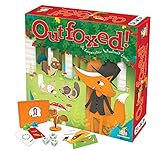 Gamewright Outfoxed!Cooperative MysteryLogic, team playBoard game5 and up$24.00 Prime
Evidence: r/homeschool parent (thread started August 15, 2025), not a test
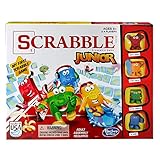 Scrabble JuniorWord Board GameWords, spellingBoard game5 and up$19.99 Prime
Evidence: maker specs only, no independent test
 Rat-a-Tat CatNumber Card GameMath, memoryCard game6 and up$11.13 Prime
Evidence: r/homeschool commenter in a thread about 6-year-olds (thread started August 15, 2025), not a test
 SET card gameVisual Logic CardsLogic, solo playCard game8+$7.49 Prime
Evidence: maker specs only, no independent test
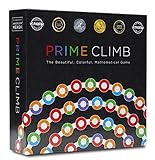 Prime ClimbMath Board GameMath, older kidsBoard game10+$29.95
Evidence: maker specs only, no independent test
How We Picked These 9 Games
How this guide was built
built from manufacturer pages and rule sheets, Amazon’s product data, CPSC recall records, AAP and CHADD guidance, two parent forum threads and two parent bloggers’ pages; we have not tested these games ourselves.
What we checked on each game
- Stock and seller: in stock and new on November 18, 2026. Six were sold by Amazon.com; Tiny Polka Dot and Prime Climb by Math for Love’s own Amazon storefront and Camelot Jr. by Smart Toys and Games, SmartGames’ US shop, each at the maker’s regular price.
- Age grade: the maker’s own label. Where an Amazon listing title differs, the review shows both and the higher grade rules. We tried to read 6 of the 9 Amazon listings once each on November 18, 2026; all 6 returned a bot check, and we did not try the other 3 (Boggle Jr., Camelot Jr. and SET).
- Warnings: quoted word for word where we found one on a maker page or rule sheet.
- Recalls: CPSC’s recall database, searched by game name (SET by its subtitle, “Visual Perception”) and by maker on November 18, 2026.
- Learning claims: quoted from the maker or a parent. We make no claim that any game improves a skill.
Sources behind these picks, what parents and ranking guides named and games we left out
Sources behind these picks
Maker sources: Math for Love, Winning Moves, Ravensburger’s ThinkFun page, SmartGames, Gamewright, Hasbro and PlayMonster. Owner reports come from an r/homeschool thread about a 6-year-old (started August 15, 2025) and an r/Parenting thread about a 4-year-old (started November 16, 2023); comments are dated by each thread’s start. We found no independent review of Scrabble Junior or SET. Winning Moves lists press pieces on Boggle Jr. and Math for Love quotes press reviews of Prime Climb; we did not read them at source, so these four rest on maker specs.
What parents and ranking guides named
The ranking homeschool blog Treehouse Schoolhouse (dated September 1, 2026; its links are Amazon affiliate links) lists more than 80 games, including Prime Climb, Zingo and Scrabble Junior. In the r/homeschool thread, the most-named game was Learning Resources’ Sum Swamp, and parents also named Tiny Polka Dot, Rat-a-Tat Cat, Outfoxed and Zingo.
Games we left out
We left out Sum Swamp, Educational Insights’ Kanoodle, Peaceable Kingdom’s Race to the Treasure and Bananagrams because we could not read an age grade from their makers: the Learning Resources, Educational Insights and MindWare pages refused our browser, and Moose Toys’ Bananagrams page gives no age. Sleeping Queens was out of stock. ThinkFun’s Rush Hour games are already picks in our guides to puzzles for kids and STEM toys.
Detailed Reviews
Math for Love Tiny Polka Dot, Math Card Deck
Parents who want a small number deck that a preschooler and an older sibling can both play.
$14.95 from AmazonAs of Nov 22, 10:04 UTCVerdict
A deck of dot and number cards with 16 games that Math for Love grades for “ages 3 – 8 and up”.
Evidence: No independent test; owner reports. r/homeschool commenter: Tiny Polka Dot.
Math for Love describes “colorful cards and 16 easy-to-learn games” and says the deck is “built to grow with your child, teaching critical skills in counting, arithmetic, and logic along the way.”
In the r/homeschool thread about 6-year-olds, one commenter wrote: “Anything from Math for Love is generally a hit in our house. For this age Tiny Polka Dot is probably the best, and it’s actually several games in one, which is nice.”
Specs (linked: Math for Love Tiny Polka Dot card deck)
- Count: 16 games; card count none given (maker)
- Age: 3 to 8 and up (maker); “Ages 3–8” (listing title)
- Players: 1 to 6 (listing title); maker gives none
- Warning: none found on the maker’s pages
Pros
- 16 games in one deck, “built to grow with your child” (maker)
Cons
- A deck of cards, with no board or pieces for children who like to move tokens
- Amazon showed limited stock on November 18, 2026
Who should buy it
Parents who want a small number deck that a preschooler and an older sibling can both play.
Winning Moves Boggle Jr., Letter Cube Game
Parents of a preschooler who points at letters and wants a word game to play alone or with a grown-up.
$12.59 from AmazonAs of Nov 22, 10:04 UTCVerdict
A picture-and-letter matching game with eight big letter cubes that Winning Moves grades “3 and up”.
Evidence: No independent test; maker specs. Source: Winning Moves.
Winning Moves lists “1 Boggle Jr. Plastic Unit, 8 Oversized Letter Cubes, 30 Picture/Word Cards (60 Words), and Illustrated Instructions.” Its “Two-sided cards have 3-letter words on one side and 4-letter words on the other.” In “Cover It” the word is hidden and the child spells it “from memory”. This is Winning Moves’ edition (item 1251), made under licence from Hasbro.
Specs (linked: Winning Moves Boggle Jr., item 1251)
- Count: 8 letter cubes, 30 two-sided cards (maker)
- Age: 3 and up (maker); “Ages 3+” (listing title)
- Players: 1 or more (maker)
- Warning: none found on the maker page or rule sheet
Pros
- Picture cards with 3-letter words on one side and 4-letter words on the other (maker)
Cons
- 60 words in all, so a confident reader may run through them quickly (our view)
- No owner report of this edition found
Who should buy it
Parents of a preschooler who points at letters and wants a word game to play alone or with a grown-up.
ThinkFun Zingo!, Picture-Word Bingo
Families with a 4- or 5-year-old who likes matching pictures and wants a game the whole table can join.
$17.49 from AmazonAs of Nov 22, 10:04 UTCVerdict
A bingo game with a tile-dispensing “Zinger” that ThinkFun rates as an “Educational game from 4 years”.
Evidence: No independent test; owner reports. r/homeschool parent: Zingo (edition not stated).
ThinkFun’s page on Ravensburger’s site lists “2 – 6” players and ages “4 – 99”, and calls Zingo “a super fun card game for kids ages 4 and up”. Tiles from the “Zingo Zinger” are matched to pictures and words on each player’s board, and ThinkFun says it “Features two board sizes and two levels of play as your pre-reader or early reader learns”. On our reads, the page’s “Warning and manufacturer information” section gave only a service e-mail.
In the r/homeschool thread, one parent wrote: “We also like Zingo for early reading practice”. The comment names Zingo, not an edition; ThinkFun also sells Zingo Sight Words and Zingo 1-2-3, which we don’t link.
Specs (linked: ThinkFun Zingo!, article 44007700)
- Count: 2 board sizes, 2 levels of play (maker)
- Age: 4 and up (maker); “Age 4 and Up” (listing title)
- Players: 2 to 6 (maker)
- Warning: none found on the maker page
Pros
- Picture-and-word tiles with two levels for pre-readers and early readers (maker)
Cons
- Needs at least two players (maker: 2 to 6)
- The parent’s praise names Zingo, not this edition
Who should buy it
Families with a 4- or 5-year-old who likes matching pictures and wants a game the whole table can join.
SmartGames Camelot Jr., Solo Logic Puzzle
Parents of a 4- to 7-year-old who likes puzzles and wants a game to play alone.
$29.99 from AmazonAs of Nov 22, 10:04 UTCVerdict
A one-player wooden path-building puzzle with 48 challenges that SmartGames grades “4-7” on one page and “4+” on another.
Evidence: No independent test; owner reports. r/Parenting parent: Camelot Jr.
SmartGames’ EU page lists “Wooden gametray, 4 towers, 3 stairways, 1 bridge, 2 figurines, booklet with challenges and solutions”, “# of Players 1” and “Age 4-7”. The child builds a path so “The knight and princess can only walk up stairways or along the top of walls.” SmartGames’ US shop sells it as a “Wooden Deduction Game for Ages 4+ with 48 Challenges”. Both maker pages carry this warning: “Small parts”.
In an r/Parenting thread about a 4-year-old who loves puzzles (started November 16, 2023), one parent wrote: “My kid also likes the Camelot Jr game, it’s a logic game. All the games we’ve tried from Smartgames are great and have what you’re looking for.”
Specs (linked: SmartGames Camelot Jr., 48 challenges)
- Count: 48 challenges; 4 towers, 3 stairways, 1 bridge, 2 figures (maker)
- Age: 4 to 7 (EU page); 4 and up (US shop and listing title)
- Players: 1 (maker)
- Warning: “Small parts” (maker)
Pros
- 48 challenges with solutions in the booklet (maker)
Cons
- Premium price tier for a one-player game
Who should buy it
Parents of a 4- to 7-year-old who likes puzzles and wants a game to play alone.
Gamewright Outfoxed!, Cooperative Mystery
Families who want a mystery game where children win or lose together.
$24.00 from AmazonAs of Nov 22, 10:04 UTCVerdict
A cooperative whodunit board game in which players work together to catch a fox, graded “5+” by Gamewright.
Evidence: No independent test; owner reports. r/homeschool parent: Outfoxed.
Players “Move around the board to gather clues and then use the special evidence scanner to rule out suspects” before the fox reaches the exit. Gamewright calls it “a wonderful venue for honing deductive reasoning in a non-competitive environment”. Its page lists an Oppenheim Toy Portfolio Platinum Award, without a year. The Amazon title calls it a game “FOR PRESCHOOLERS”; we go by Gamewright’s 5+.
In the r/homeschool thread, a parent wrote: “Outfoxed is a big hit with my kids and has some light math skills built in.”
Specs (linked: Gamewright Outfoxed!, stock 418)
- Count: 16 suspects, 3 dice, 1 clue decoder (maker)
- Age: 5 and up (maker); “for preschoolers” (listing title)
- Players: 2 to 4 (maker)
- Warning: none found on the maker page or rule sheet
Pros
- Everyone plays as one team against the fox (maker)
Cons
- A game with dice, pawns and markers to keep track of
- Needs 2 to 4 players, with no solo mode (maker)
Who should buy it
Families who want a mystery game where children win or lose together.
Hasbro Scrabble Junior, Word Board Game
Families with a 5-year-old or older reader who wants a first version of Scrabble.
$19.99 from AmazonAs of Nov 22, 10:04 UTCVerdict
A two-sided Scrabble board for younger players that Hasbro grades “AGES 5+”.
Evidence: No independent test; maker specs. Source: Hasbro.
Hasbro’s page for game B0325 lists a “2-sided gameboard, 105 letter tiles, 4 tokens and game guide”. On the first side, children match tiles to words printed on the board; Hasbro says to “turn the board over for the advanced level, where they come up with their own words.” Hasbro notes “Adult assembly required.” The game guide carries this warning: “CHOKING HAZARD”. It continues: “Small parts. Not for children under 3 years.”
Specs (linked: Hasbro Scrabble Junior, B0325)
- Count: 105 letter tiles, 4 tokens (Hasbro)
- Age: 5 and up (Hasbro); “Ages 5+” (listing title)
- Players: 2 to 4 (Hasbro)
- Warning: “Small parts. Not for children under 3 years.” (Hasbro)
Pros
- Two boards in one: printed words first, free play on the back (Hasbro)
Cons
- 105 letter tiles under a Hasbro “CHOKING HAZARD” warning
- No owner report of this edition found
Who should buy it
Families with a 5-year-old or older reader who wants a first version of Scrabble.
Gamewright Rat-a-Tat Cat, Number Card Game
Families with a 6-year-old who likes card games and numbers.
$11.13 from AmazonAs of Nov 22, 10:04 UTCVerdict
A 54-card numbers game in which the lowest score wins, graded “6+” by Gamewright.
Evidence: No independent test; owner reports. r/homeschool commenter: Rat a Tat Cat.
Gamewright sums it up: “Get rid of the high cards (rats) and go for the low cards (cats). Sneak a peek, draw two, or swap cards for an added twist. Low score wins the game.” The maker says that as children play, “they develop a sense of timing and an understanding of basic, but essential, mathematical concepts.” Its page lists awards including Mensa Select, without years. The rule sheet says “2 to 6 Players • Ages 6 and up”.
In the r/homeschool thread, the same commenter wrote: “Rat a Tat Cat is good for practice recognizing and comparing numbers. (We allow younger kids to see all their cards at first instead of having to remember them.)”
Specs (linked: Gamewright Rat-a-Tat Cat, stock 204)
- Count: 54 cards (maker)
- Age: 6 and up (maker); “Kids 6+” (listing title)
- Players: 2 to 6 (maker)
- Warning: none found on the maker page or rule sheet
Pros
- Low-score card play with peek, draw-two and swap cards (maker)
Cons
- Players “learn ways to remember their cards” (maker); Gamewright’s rules for younger children leave two cards “face up”
SET Family Card Game, Visual Logic Cards
Families who want a quick pattern game that children of 8 and up can play with adults.
$7.49 from AmazonAs of Nov 22, 10:04 UTCVerdict
An 81-card pattern-spotting game that PlayMonster grades “Ages 6 & Up” and the Amazon listing title marks “For Ages 8+”; we go by 8+.
Evidence: No independent test; maker specs. Source: PlayMonster.
PlayMonster sells SET as item 1000, “The Family Game of Visual Perception”. Players race to find a SET: “three cards where each individual feature (color, shape, number and shading) is either all the same OR all different!” The maker adds that “there are no “turns” and no luck here!” and that it suits “a wide age range and number of players (including solo play!)”. PlayMonster calls it “award-winning” without naming the award. The Amazon listing names the maker as SET Enterprises.
Specs (linked: SET, item 1000)
- Count: 81 cards (maker)
- Age: 6 and up (maker); “For Ages 8+” (listing title)
- Players: solo or group (maker)
- Warning: none found on the maker page
Pros
- No turns: everyone looks for a SET at once (maker)
Cons
- Fast play can favour the quickest spotter at the table (our view)
- No owner report of this edition read
Who should buy it
Families who want a quick pattern game that children of 8 and up can play with adults.
Math for Love Prime Climb, Math Board Game
Families with a child of 10 or older, or 8 and up with an adult playing along.
$29.95 from AmazonAs of Nov 22, 10:04 UTCVerdict
A dice-and-arithmetic race board game that Math for Love grades for “ages 10+ (or 8+ with adult guidance)”.
Evidence: No independent test; maker specs. Source: Math for Love.
Math for Love describes it this way: “Roll the dice and add, subtract, multiply and divide your way to the center of the board, picking up Prime cards and bumping your opponents back to start as you go. The first to land both pawns on 101 wins the game!” The maker claims “Everyone can learn to multiply and divide using Prime climb’s unique color coding.” On November 18, 2026, Math for Love’s own shop had it on sale below its regular price; Amazon charged the regular price.
Specs (linked: Math for Love Prime Climb)
- Count: board, dice, pawns and Prime cards; counts none given (maker)
- Age: 10 and up, or 8 and up with adult guidance (maker)
- Players: 2 to 4 (maker)
- Warning: none found on the maker’s pages
Pros
- Color-coded board; players add, subtract, multiply and divide to move (maker)
Cons
- Math for Love grades it 10+ for play without a grown-up
- Premium price tier
Who should buy it
Families with a child of 10 or older, or 8 and up with an adult playing along.
Which Game for Which Child?
Our suggestions, within each maker’s age grade:
- A 3- or 4-year-old: Tiny Polka Dot or Boggle Jr.; Zingo and Camelot Jr. from 4.
- A child who likes to play alone: Camelot Jr., Boggle Jr. or SET.
- Siblings who argue over who won: Outfoxed!, where players win or lose as a team.
- A 7-year-old: Rat-a-Tat Cat or Scrabble Junior.
- A 10- or 12-year-old: Prime Climb or SET.
- Free or online games: out of scope here. For hands-on choices, see our learning toys and outdoor games guides.
Ages, Small Parts and Recalls
On the pages we read, two makers print small-parts lines: Hasbro’s Scrabble Junior guide reads “CHOKING HAZARD” and “Small parts. Not for children under 3 years.”, and SmartGames lists “Small parts” for Camelot Jr. For the other seven we found no warning on the maker pages and rule sheets we read, and we could not read their Amazon listings, so check the listing’s safety information and the box. Pediatrician Mom’s board-game page (its links are Amazon affiliate links) adds: “Some of these board games have small pieces, so be aware if you have little ones under 3y in the household!”
On November 18, 2026, CPSC’s recall database returned no recall naming any of these nine games in the game-name and maker searches we ran. It did return recalls of other products from Hasbro (for example Super Soaker blasters, 2020) and PlayMonster (Kid O rattles, 2022). Check CPSC’s recall list again before you buy.
Frequently Asked Questions
Q. What are the top 10 educational games for kids?
We found no top-10 ranking we could source. We picked 9 boxed games: three for numbers, three for words and three for logic.
Q. What games do ADHD kids like?
We make no ADHD claim for any game here. CHADD’s ADHD Weekly (August 21, 2025) reported a review of long-term studies of non-medication therapies in which researcher Jingyi Zhou wrote: “meditation, EMG feedback, and board games did not significantly affect inhibitory control.” CHADD adds that the researchers “found both board games and meditation haven’t been studied long enough to determine if they will be helpful with ADHD symptoms”. It also says experts “warn parents not to change their child’s current treatment plan without discussion with their child’s specialist or prescriber”.
Q. Which is better, IXL or ABCmouse?
We don’t compare them: both are online subscriptions, and this page covers boxed games. The AAP’s toy-buying page says: “Traditional card games and board games (not the video game or app versions) and even toy letters and books create opportunities for you and your child to interact and have fun together.”
Q. Which game is best for kids’ brain development?
We don’t name one, and we make no development claim for any game here. The AAP says of play in general: “Research shows play can improve children’s abilities to plan, organize, get along with others and regulate emotions. In addition, play helps with language, math and social skills, and even helps children cope with stress.”
The bottom line
Final Verdict
Math for Love Tiny Polka Dot (check price) is the entry-level math deck for ages 3 and up, ThinkFun Zingo! (check price) the mid-range word game from age 4, and Gamewright Outfoxed! (check price) the mid-range cooperative logic game from age 5.
Product prices and availability are accurate as of the date/time indicated and are subject to change. Any price and availability information displayed on Amazon.com at the time of purchase will apply to the purchase of this product.